
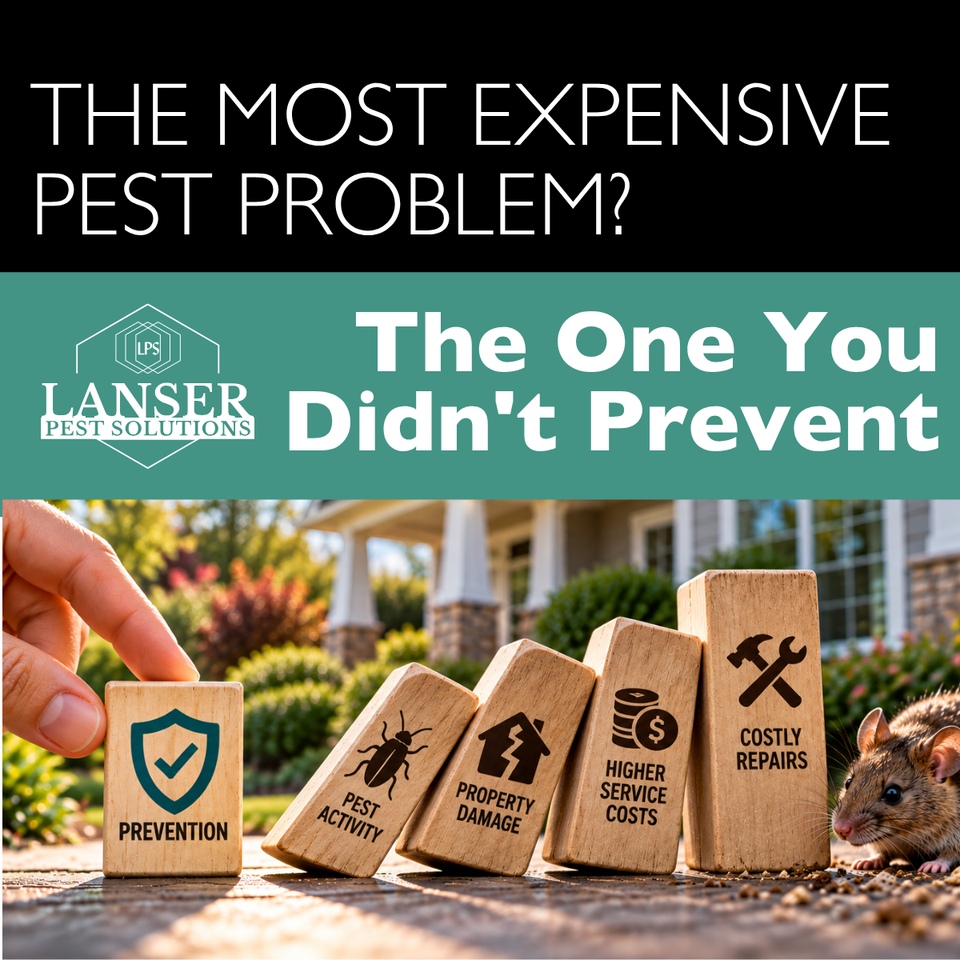
The Cost of Waiting: Why Pest Prevention Matters
What if the biggest expense of a pest problem isn't the pest control itself?
When most people think about the cost of pest control, they think about what it will take to eliminate an existing problem.
However, the damage that can occur before a pest problem is discovered is often overlooked. From damaged insulation and chewed electrical wiring to contaminated belongings and structural concerns, pest activity can have consequences that extend well beyond the pests themselves.
It's understandable that pest control isn't always at the top of a property owner's maintenance checklist, especially when there are no visible signs of a problem. But many insects, rodents, and wildlife species are particularly good at going unnoticed.
Understanding the difference between corrective pest control and preventative pest management can help you make more informed decisions about maintaining and protecting your property.
Why Pest Problems Often Go Unnoticed
Just because you aren't seeing pests doesn't necessarily mean they aren't present. Many pests prefer quiet, protected areas where they can find food, water, and shelter without being disturbed.
Some of the most common areas where pest activity can go unnoticed include:
- Attics and crawl spaces
- Basements and utility rooms
- Behind appliances and cabinetry
- Inside walls and ceiling voids
- Garages and storage areas
- Around rooflines, soffits, and siding
- Beneath decks and porches
These areas aren't typically part of our everyday routines. You might go months without looking behind your refrigerator, inspecting your attic insulation, or examining the area around your home's foundation.
Even a well-maintained property can experience pest problems. Small openings, changing weather conditions, nearby construction, and the natural movement of pests can all contribute to new activity.
By the time visible signs appear, pests may have already established themselves in less accessible areas of the property.
This is one reason routine inspections can be such a valuable part of ongoing property maintenance.
It's Not Just About the Pests: Understanding the Potential Damage
While pests can certainly be a nuisance, their presence can also affect the condition of your property. The type and extent of damage depend on the pest involved, the length of time it has been present, and the conditions within the building.
Damaged Insulation
Rodents and other wildlife may disturb insulation while creating nesting areas, establishing travel routes, or searching for shelter.
In addition to physically damaging insulation, animals can leave behind urine, droppings, and nesting materials. Depending on the extent of the activity, affected insulation may require professional cleaning or replacement.
Because insulation is often located in areas that aren't regularly visited, this type of damage can go unnoticed for extended periods.
Chewed Electrical Wiring and Building Materials
Mice, rats, and squirrels naturally gnaw on materials. Unfortunately, this behavior can result in damage to electrical wiring, wood, plastic, and other building components.
Damage to electrical wiring is particularly concerning because it may create electrical hazards that require professional evaluation and repair.
Rodents may also enlarge existing openings to improve access to food and shelter, creating additional opportunities for pests to enter.
Contaminated Food and Stored Belongings
Basements, garages, pantries, and storage rooms can provide attractive environments for pests.
Rodents may chew through packaging, damage stored belongings, and contaminate surfaces with droppings or urine. In some situations, affected items may need to be discarded rather than cleaned.
The Centers for Disease Control and Prevention (CDC) also recommends specific precautions when cleaning areas affected by rodent activity. For example, sweeping or vacuuming untreated rodent droppings can introduce potentially contaminated particles into the air. Early detection can help limit the areas and belongings affected.
Structural Damage from Wood-Destroying Insects
Subterranean termites and carpenter ants present different challenges from many common household pests.
Termites feed on cellulose-containing materials, including wood, while carpenter ants excavate wood to create nesting galleries. Although their behaviors differ, both can contribute to damage within a structure.
According to Penn State Extension, eastern subterranean termites are found throughout Pennsylvania, and noticeable damage is often the result of an infestation that has existed for years.
Routine visual inspections can help identify accessible evidence of wood-destroying insect activity or conditions that may increase the likelihood of an infestation. However, because activity can be concealed, the absence of visible evidence doesn't necessarily rule out a problem.
The Cost of a Pest Problem Goes Beyond Treatment
When evaluating the cost of addressing an established pest problem, it's important to consider the potential expenses beyond the initial pest control service.
Depending on the circumstances, additional costs may include:
- Replacement of damaged insulation
- Electrical inspections and repairs
- Structural repairs
- Cleaning and decontamination
- Replacement of damaged belongings or inventory
- Repairs to siding, soffits, vents, or other exterior materials
- Additional pest control visits and follow-up services
For businesses, pest problems can also create operational disruptions, affect customer experiences, and require employees to spend time addressing issues outside their normal responsibilities.
Not every pest problem will result in significant damage or unexpected expenses. Some issues can be addressed relatively quickly and easily. However, allowing certain pests to remain undetected or unmanaged gives them more opportunity to become established.
The value of prevention is that it can help reduce those opportunities.
Corrective Pest Control vs. Preventative Pest Management
Corrective Pest Control Addresses Today's Problem
Corrective pest control focuses on resolving an existing issue.
A property owner might discover mice in the basement, ants throughout the kitchen, termite activity in a crawl space, or wildlife nesting in an attic. The immediate priority is identifying the pest, evaluating the extent of the activity, and determining an appropriate treatment or removal strategy.
Corrective services are necessary when a pest problem has already developed. Depending on the pest involved, multiple visits, specialized treatments, trapping, or additional repairs may be needed.
However, resolving an existing infestation doesn't automatically eliminate the conditions that allowed it to develop.
Preventative Pest Management Looks Ahead
Preventative pest management focuses on reducing the likelihood of future problems while identifying new concerns as early as possible.
Rather than relying solely on treatments after a pest is discovered, a preventative approach considers the entire property and the environmental conditions that may contribute to pest activity.
This may include routine inspections, monitoring, targeted treatments when appropriate, identifying potential entry points, and recommending changes that make a property less attractive or accessible to pests.
The two approaches work together. Corrective pest control helps resolve an immediate concern, while ongoing prevention helps protect against future activity.
Pest Prevention Is About More Than Applying Treatments
Effective pest management involves understanding why pests are present and what can be done to reduce the conditions that support them.
This approach is commonly known as Integrated Pest Management, or IPM. The U.S. Environmental Protection Agency recognizes IPM as an approach that combines pest identification, monitoring, preventative measures, and appropriate control methods.
In practical terms, this means looking beyond the pest itself.
If mice are repeatedly entering a basement, for example, controlling the existing population is only part of the solution. Identifying how they are entering and what makes the space suitable for shelter can be equally important.
Similarly, recurring insect activity near a window may warrant an inspection of surrounding gaps, moisture conditions, or nearby vegetation.
Understanding these contributing factors allows pest management decisions to be based on the specific needs of the property rather than simply repeating the same treatment.
Three Important Components of Long-Term Pest Prevention
Routine Inspections and Early Detection: Regular inspections provide an opportunity to look for signs of pest activity, identify changing conditions, and discover potential concerns before they become more noticeable.
An inspection may reveal something as simple as deteriorating weatherstripping, an opening around a utility line, or moisture accumulating near the foundation. It may also uncover evidence of activity in an area that hasn't been regularly checked.
Establishing a history of inspection findings can help identify recurring concerns and determine whether previous preventative measures are working.
Even when no pest activity is found, inspections provide valuable information about the condition of the property.
Exclusion - Addressing How Pests Get Inside: Exclusion is the process of identifying and addressing openings that allow pests to enter a structure.
Many property owners are surprised by how small these openings can be. According to the CDC, a mouse can fit through an opening approximately one-quarter of an inch wide.
Common areas of concern include gaps beneath doors, utility penetrations, foundation openings, damaged screens, roof vents, and spaces around siding and soffits.
Professional exclusion work may involve installing protective screening, improving door seals, securing vulnerable vents, or closing openings with materials appropriate for the location and pest involved.
When wildlife is already present, exclusion must be carefully coordinated with removal to avoid trapping animals inside the structure.
Combining exclusion with appropriate pest management can help address both existing activity and the vulnerabilities that contribute to recurring problems.
Ongoing Pest Management: Properties change over time. Building materials deteriorate, vegetation grows, weather conditions fluctuate, and new pest pressures develop throughout the year.
Ongoing pest management provides opportunities to evaluate these changes and adjust preventative strategies accordingly.
A maintenance program should involve more than simply applying a product at scheduled intervals. Inspection, monitoring, communication, and property-specific recommendations are all valuable parts of the process.
The appropriate service frequency and level of protection depend on factors such as the property's construction, location, pest history, surrounding environment, and intended use.
Why Pest Prevention Matters Throughout the Year in Pennsylvania
Here in Lancaster, Berks, and Lebanon counties, changing seasons bring different pest pressures.
During spring, warmer temperatures increase insect activity, including ants and swarming termites. Summer brings increased activity from stinging insects and other outdoor pests.
As temperatures begin to cool in the fall, rodents and overwintering insects may seek shelter inside homes and businesses.
During winter, outdoor insect activity generally slows, but heated buildings and protected spaces can continue to support rodents and certain insects.
Each season presents different opportunities to identify vulnerabilities and prepare for changing conditions. For example, addressing damaged door seals before colder weather arrives may help reduce opportunities for rodents to enter.
Pest prevention isn't limited to the warmer months. It's an ongoing part of caring for a property throughout the year.
Simple Ways to Make Pest Prevention Part of Property Maintenance
There are several practical steps that homeowners and business owners can incorporate into their regular maintenance routines.
- Check exterior doors, garage doors, and windows for damaged seals or visible gaps.
- Inspect accessible areas around the foundation and utility openings.
- Store food, pet food, and birdseed in durable, tightly sealed containers.
- Address plumbing leaks and drainage concerns.
- Keep vegetation trimmed away from buildings where practical.
- Store firewood and other materials away from exterior walls.
- Periodically check storage areas for droppings, gnaw marks, nesting materials, or damaged packaging.
- Pay attention to unusual scratching sounds, recurring insect sightings, or other changes around the property.
It can also be helpful to document unusual findings with photographs and note when and where they occur.
Not every insect sighting requires a professional treatment. However, recurring activity, unexplained damage, or evidence of rodents and wood-destroying insects deserves further investigation.
These simple habits, combined with professional inspections when appropriate, can help property owners identify concerns earlier and make more informed maintenance decisions.
Prevention Is an Investment in Your Property
We often perform preventative maintenance without giving it much thought. We service heating and cooling systems, clean gutters, inspect roofs, and address small plumbing issues because we understand the value of maintaining these systems before something goes wrong.
Pest prevention deserves a similar place on that maintenance checklist.
The goal isn't to suggest that every property is facing an undetected infestation or that every pest problem will lead to expensive repairs. Rather, it's to recognize that early detection, routine care, and addressing vulnerabilities can help reduce the likelihood of more complicated problems developing over time.
A proactive approach also gives property owners more control over their maintenance decisions. Instead of responding only when something goes wrong, they can plan ahead, prioritize improvements, and address concerns as they arise.
No pest management program can eliminate every possibility of future activity, but it can help reduce risks and provide greater peace of mind.
Protecting Your Property Starts Before There's a Problem
At Lanser Pest Solutions, we believe effective pest management goes beyond addressing the pests you see. It's also about understanding your property, identifying contributing conditions, and helping prevent recurring problems.
Our ongoing maintenance plans, professional exclusion services, and pest and wildlife inspections provide different ways to address your property's needs. Whether you have experienced pest problems in the past or simply want to take a more proactive approach to property maintenance, understanding your property's vulnerabilities is a valuable first step.
If you're unsure where to start, consider scheduling a complimentary pre-service inspection to better understand your property's pest prevention needs.
Because protecting your property isn't just about solving today's pest problems. It's about looking ahead to tomorrow's.