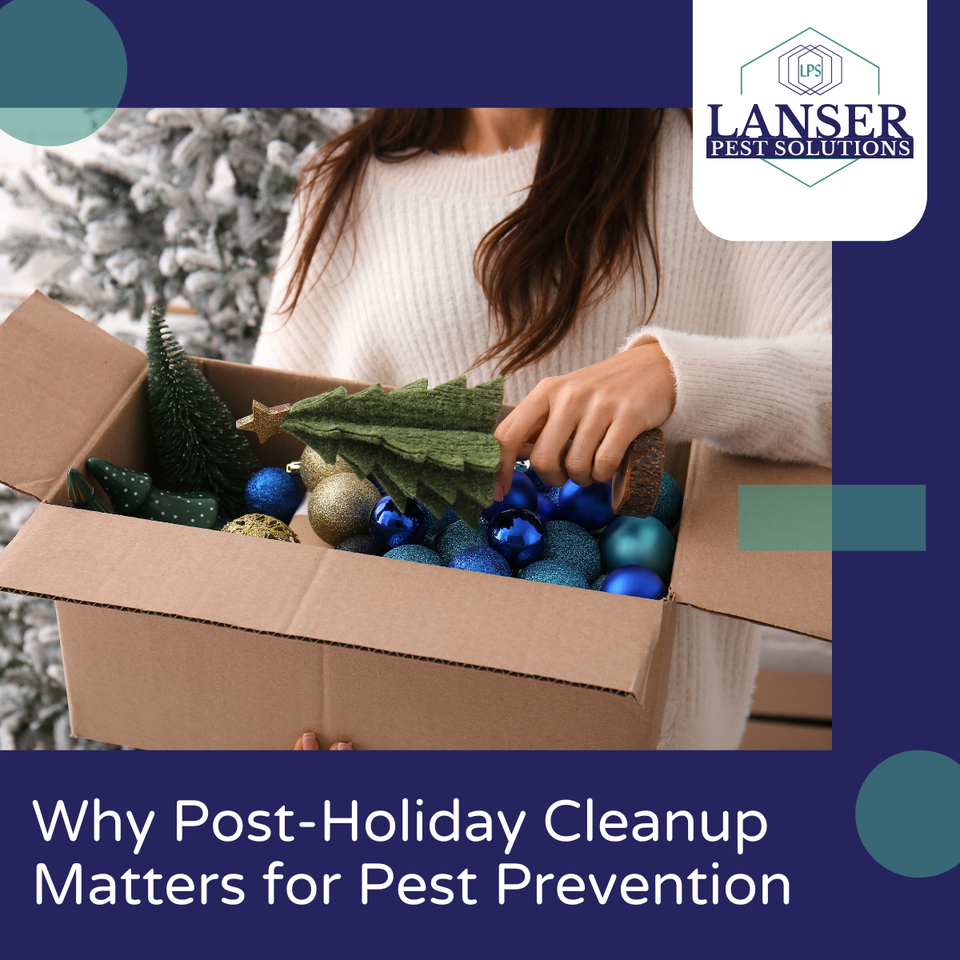
The holiday season is a time for celebrations, family gatherings, and cozy winter evenings. But once the festivities wind down, many homeowners are left with a messy house filled with crumbs, cardboard boxes, and heaps of decorations. While these remnants are a normal part of holiday cleanup, they can also create ideal conditions for pests.
In this guide, we’ll explore why pests are drawn to post-holiday clutter, how leftover food residue and storage materials provide food and shelter, and what you can do to help protect your home from pests well into the new year. Why Post-Holiday Mess Invites Pests
When the holidays are underway, homes see a lot more activity — cooking, hosting, decorating, and entertaining. These activities often generate:
Food crumbs and spills
Overflowing trash and recycling
Cardboard boxes and clutter
Boxes of decorations tucked into attics, basements, and garages
Each of these factors contributes to pest attraction in different ways.
Food Crumbs and Organic Residue Attract Insects and Rodents
Even small amounts of food residue left behind after holiday meals can draw pests. Ants, cockroaches, and even rodents are skilled at sniffing out food sources. According to the National Pest Management Association (NPMA), food crumbs and spills in kitchens and dining areas are among the top attractants for household pests during the holiday season.
Crumbs on countertops, floors, or even in couch crevices create inadvertent feeding stations for ants and cockroaches. Rodents like mice and rats are especially adept at tracking food smells over long distances, and they’ll use any opportunity to enter a home where food is accessible.
Simple actions like sweeping floors thoroughly, wiping down surfaces after meals, and promptly disposing of food scraps can significantly reduce attraction. Regular vacuuming in high-traffic areas, especially kitchens and dining rooms, helps eliminate hidden food debris that pests search for.
Cardboard Boxes and Clutter Provide Shelter and Nesting Sites
Once the holiday decorations come down, many people stack up cardboard boxes full of ornaments, lights, and storage items.
Unfortunately, cardboard is one of the most pest-friendly materials you can have in your home.
Cardboard boxes:
Are easy for rodents to chew through
Provide dark, undisturbed hiding spots
-
Can hold moisture, creating ideal conditions for insects like silverfish and cockroaches
These boxes often go untouched for months in attics, garages, or closets — which turns them into perfect harborage areas for pests that seek shelter during colder months when outdoor temperatures drop.
Clutter from holiday cleanup — whether boxes, wrapping paper, or discarded décor — combines food sources and shelter, making a home irresistible to pests unless steps are taken to clean and organize properly.
Decorations May Harbor Hiding Pests
Many holiday decorations contain organic materials or undisturbed spaces that pests like to use:
Live greenery (trees, wreaths, garlands) can carry insects, egg sacs, or small critters from outdoors into your home.
Fabric stockings, tree skirts, or cloth décor can provide warmth and nesting material for rodents or insects if not properly cleaned before storage.
Holiday storage areas like basements and attics, where boxes remain untouched, become safe havens for pests that come inside seeking warmth when temperatures drop.
Rodents, spiders, silverfish, and even cockroaches can hide in wreaths, artificial trees, and other décor for months.
When you unpack decorations weeks after the last holiday party, you may inadvertently bring pests into your living areas.
Common Pests Drawn to Holiday Clutter
Different pests are attracted to post-holiday conditions for various reasons:
Rodents (Mice & Rats)
Rodents are drawn to:
Food scraps
Warm, sheltered spaces
Cluttered storage areas where they can nest undisturbed
Attics, basements, and garages with cardboard boxes and holiday décor make perfect rodent habitat during winter. Rodents will chew through boxes and fabrics to make nests and stay warm.
Cockroaches and Silverfish
Cockroaches and silverfish feed on:
Moisture
Paper products like wrapping paper
Food particles hidden in boxes and clutter
They thrive in undisturbed spaces like stacked boxes in attics, basements, or closets. A periodic cleanup and organization can help reduce their nesting opportunities.
Spiders and Insects
Spiders often follow other pests; where mice and insects are found, spiders may be nearby. Other insects like ants and beetles may also find paper, cloth, and decoration materials an attractive environment — especially if crumbs or sticky residues are present.
Why Pests Appear More Noticeable After the Holidays
During the holidays, homes are bustling with activity. Doors open frequently, family members spend more time in the kitchen, and food is often prepared in large quantities. By the time the holidays are over and activity slows down, pests that entered during that busy period may begin to explore and establish nests or feeding sites — which becomes more noticeable in January and February.
Once the holiday chaos is behind you, pests may become more obvious because:
They’ve established a home in cluttered storage spaces
Food sources are now less visible, pushing them into living areas
Cooler weather drives pests deeper indoors
This is why winter and early New Year months often see an increase in pest sightings.
Post-Holiday Cleanup Tips to Prevent Pest Problems
Now that you understand why the holidays can invite pests, let’s explore effective cleanup and prevention strategies to reduce the risk of problems going forward.
Deep Clean Before Storing Decorations
Before you pack away holiday décor:
Wash and dry fabric items (stockings, tree skirts)
Wipe down ornaments to remove crumbs, dust, and residue
Shake artificial greenery outside to dislodge insects or egg sacs
Removing organic residue reduces the scent trails pests use to locate food and nesting opportunities.
Use Plastic Storage Bins Instead of Cardboard
One of the biggest mistakes homeowners make is storing décor in cardboard boxes, which pests can chew through easily.
Instead:
Use sturdy, airtight plastic containers with snap-on lids
Choose clear bins so you can see contents without opening them
Label bins to avoid unnecessary opening (and exposure) later
Airtight containers block access and reduce odors that attract pests. Cardboard, by contrast, absorbs moisture and provides building material for nests.
Store Decorations Off the Ground
Keeping holiday bins on the floor of a basement or garage creates easy access for pests.
Instead:
Place bins on shelves or elevated racks
Keep a few inches between bins and the wall
- Store decorations in a dry, well-ventilated area
Elevating bins reduces the chance pests will get inside — especially rodents that crawl close to ground level.
Clean Up Food Messes Immediately
After holiday meals, be diligent about cleanup:
Sweep floors and wipe countertops
Store food in airtight containers
Dispose of trash promptly
Even a few crumbs forgotten under the table can attract ants or cockroaches, which reproduce rapidly if given a reliable food source.
Declutter Storage Areas Year-Round
Regularly organize and declutter:
Basements
Closets
Attics
Garages
A structured cleaning regime discourages pests by removing shelter and food sources. Piles of boxes and clutter create the perfect environment for these creatures to hide and multiply.
Inspect All Decorations Before Bringing Them Indoors
When it’s time to decorate next season:
Shake out greenery outdoors
- Inspect ornaments and boxes for pests or webs
- Vacuum or brush artificial trees and wreaths before bringing them inside
This can prevent inadvertent introduction of pests into your home.
Seal Entry Points Around Your Home
Holiday cleanup is also a good reminder to inspect your home for gaps and cracks that can let pests in. Even small openings around doors, windows, and utility lines can serve as entry points. Sealing gaps with caulk, weatherstripping, or mesh keeps pests out.
For more on pest exclusion and protection, check our exclusion services page.
Consider Professional Inspections After the Holidays
If you notice pest activity after holiday cleanup — such as droppings, gnaw marks, or spider webs — it’s a good idea to schedule a professional inspection. Early detection can prevent small problems from becoming large infestations. Post-Holiday Prevention Maintenance Plan
After the holiday season is over, consider implementing a seasonal maintenance plan — like our All Season Protection Plan — to keep pests at bay year-round. Winter is a great time to inspect for rodents seeking warmth or insects hiding in storage areas.
Regular scheduled visits help identify conditions that may attract pests, allowing you to address them before they become problems.
The holiday season brings joy, family, and tradition — but it also creates unique conditions that can attract pests. From food remnants and spills to cardboard clutter and forgotten decorations, many holiday leftovers act as invitations for mice, spiders, roaches, and other critters looking for food and shelter.
Post-holiday cleanup is about more than tidying up — it’s an important step in reducing pest activity throughout the winter months. By cleaning thoroughly, storing decorations properly, and staying organized, you can limit the conditions pests look for inside your home.
If you’d like an extra layer of confidence, our team is here to help with inspections and ongoing protection to keep small issues from becoming bigger problems.