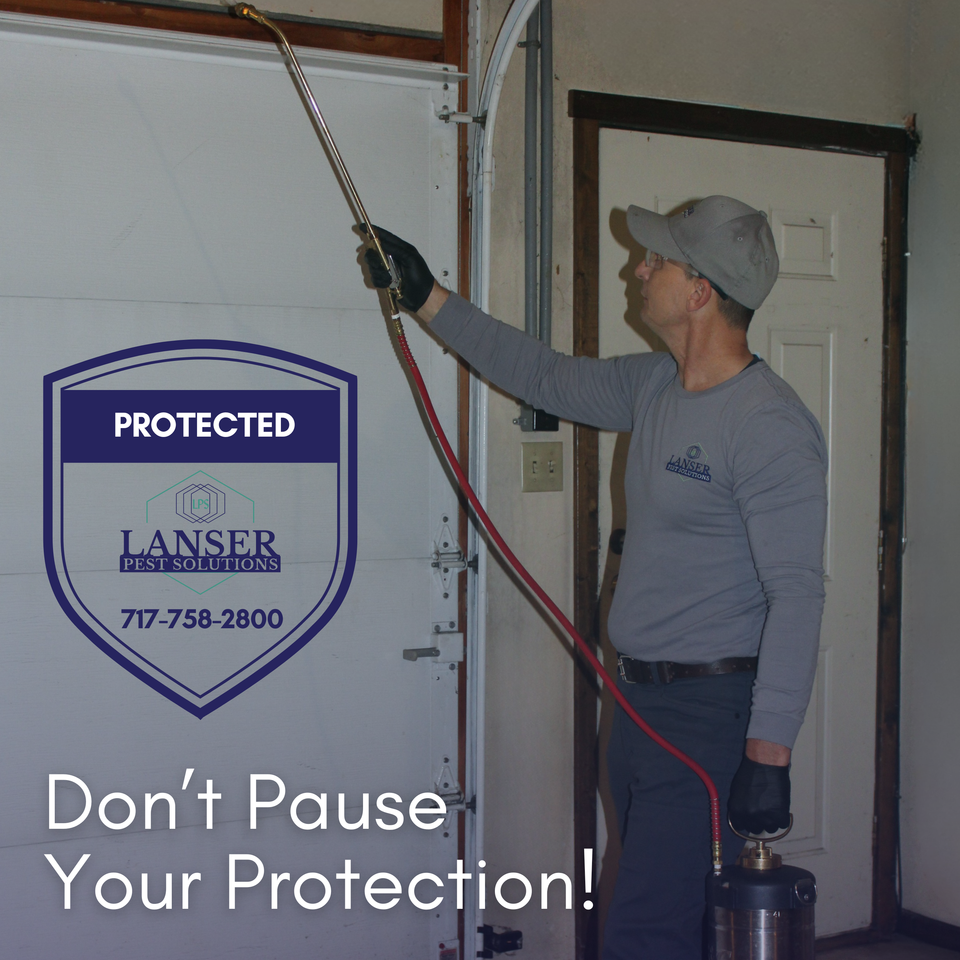
Winter brings quieter yards, early sunsets, and a break from some summer pests — but it’s far from a pest-free season.
At Lanser Pest Solutions, we continue servicing homes and businesses through the cold months because many pests simply change behavior: they move indoors, become harder to notice, or create long-term damage while hidden.
In this article, we explain why pest control in winter still matters, what pests you should watch for, how winter termite inspections and stored-product pest inspections fit into a comprehensive plan, and why our All Season Protection Plan can save you time, money, and stress. Why winter is not “off-season” for pests
Many people assume cold weather kills or forces pests away — but that assumption overlooks the survival strategies pests use.
Instead of disappearing, many species:
Move indoors to access warmth and food.
- Become nocturnal or quieter, making them less visible but still active.
- Nest in hidden voids (attics, wall cavities, insulation), where damage continues unseen.
- Shift from outdoor feeding to stored-food sources inside homes and businesses.
Therefore, pest control in winter is not about eliminating visible insects on the lawn — it’s about protecting the interior of your home or business and preventing small problems from becoming costly, long-term issues.
Top reasons we continue pest control in winter
Rodents seek shelter and food
Mice and rats don’t hibernate. As temperatures drop, they look for cozy nests with steady food and water. Once inside, they reproduce rapidly, cause structural damage by chewing wires and insulation, and leave droppings that create health and sanitation risks.
Early detection and exclusion work in the fall and winter can help reduce these issues.
Overwintering insects hide where you least expect them
Many insects overwinter as adults in protected micro-climates — under siding, in attics, or inside wall voids.
Examples include stink bugs and conifer seed bugs. While these don’t cause structural damage, their presence becomes a nuisance and can worry guests or visitors.
Termite activity can continue under the radar
Subterranean and Drywood termites maintain activity in protected soil and inside wood. Winter is a key time for termite inspections because areas of moisture intrusion or hidden wood damage are easier to spot without dense foliage and with less outdoor activity distracting you.
Stored-product pests remain a year-round issue
Pantry pests — like Indian meal moths, flour beetles, and grain weevils — thrive in indoor food environments.
Winter brings increased indoor cooking and bulk food storage, creating ideal conditions for these pests to reproduce. A stored-product pest inspection in winter prevents contamination and costly product loss.
Early prevention can save money and stress
Treating infestations after they’re established is more expensive than preventing them. Routine winter checks let technicians find and address entry points, monitor bait stations, and recommend targeted treatments that avoid repeat problems.
Common winter pests you may still see (and why they matter):
Mice & Rats: Structural damage, disease transmission risk, rapid reproduction.
Stored-product pests: Food contamination, lost inventory for businesses, rework for homeowners.
Termites: Slow, hidden structural damage that’s costly if discovered late.
Spiders: Often indicators of other pest activity in basements, attics, and crawlspaces.
Stink bugs & Conifer seed bugs: Nuisance indoor overwinterers that stink when disturbed.
Cockroaches (in heated buildings): Thrive in warm indoor environments; pose health risks in food prep areas.
Each of these pests behaves differently in winter, but they share one thing: they can survive and cause problems indoors, so winter pest control remains essential.
Why winter termite inspections matter
Many property owners think termite season is only spring and summer — but that’s misleading. Here’s why winter termite inspections are important:
Hidden damage is easier to spot. With leaves down and less clutter outdoors, technicians can better assess foundation lines, drainage issues, and exterior wood condition.
Moisture problems surface in cold weather. Winter condensing, ice dams, and clogged gutters can create damp conditions that attract termites and other wood-destroying organisms.
Early detection reduces repair costs. Identifying termite activity or conducive conditions in winter gives you time to plan repairs, mitigate moisture, and schedule treatment before warm weather triggers swarmers or more active feeding.
Peace of mind for property owners. A winter inspection provides a written assessment of risk and helps you plan for ongoing protection.
At Lanser Pest Solutions, our termite inspections follow a careful protocol: we inspect the structure interior and exterior, check previous treatment records, identify moisture and wood-to-soil contact issues, and document findings with photos and recommendations.
Stored-product pest inspections in winter: why we do them
Winter changes food storage patterns — think holiday baking, bulk purchases, and long-term storage of pet and pantry items. Stored-product pests take advantage of these conditions.
Why inspect in winter?
High indoor food levels create more resources for pests.
Warm, stable indoor temperatures allow them to reproduce year-round.
Early detection avoids contaminated ingredients and prevents guest complaints or business losses.
Our stored-product pest inspections include a careful review of kitchen and pantry storage, identification of any active pests or larvae, and targeted recommendations: rotate stock, seal containers, and, when necessary, use targeted treatments that are safe for food areas and compliant with regulations.
What a winter service visit typically includes
When you schedule pest control in winter with Lanser Pest Solutions, we focus on the services that matter most during the season:
-
Detailed interior inspection (attic, basement, crawlspace)
Monitoring checks
Exclusion work recommendations and minor sealing (door sweeps, vent screens, small gap sealing)
Termite inspection
Stored-product pest check for kitchens, pantries, and food storage areas
Targeted treatments only when necessary — we emphasize low-impact methods and precise placement.
Written service report with findings, and recommended next steps, if any.
We tailor each visit to the property’s specific needs — whether it’s a family home, a bed & breakfast, or a small commercial kitchen — and document everything for your records.
Exclusion: the most effective winter strategy
Exclusion work: sealing points of entry and blocking access — is the single most cost-effective long-term strategy for winter pest control. Why? Because if pests can’t get inside, they can’t nest, contaminate, or gnaw your property.
Key exclusion tasks for winter:
Seal gaps around utility penetrations and foundation cracks.
Install or repair attic, soffit, and foundation vents with proper screening.
Replace worn weather stripping and door sweeps.\
Seal gaps around pipes, HVAC lines, and dryer vents.
Fit custom vent screens and repair damaged siding or flashing.
We often pair exclusion work with monitoring devices so we can confirm whether the interventions are effective over time — a practical, measured approach that reduces chemical use while improving protection.
Why All Season Protection beats “seasonal only” service
Some property owners buy one treatment in spring and then wait until they see a problem. That reactive approach often misses the subtle activity that builds while you sleep or while the building is closed for the season.
Benefits of year-round maintenance:
Continuous monitoring catches new activity early.
Ongoing exclusion checks ensure small openings don’t become big entry points.
Seasonal adjustments tailor services to what pests are doing in spring, summer, fall, and winter.
Simplified budgeting — predictable, regular service spreads costs and reduces emergency visits.
Better relationships and faster response — technicians who know your property can diagnose and solve problems faster.
Our All-Season Protection Plan is specifically built to deliver this steady, adaptive protection. It blends inspections, monitoring, exclusion, and targeted treatments so you don’t have to guess whether you’re covered — you always are.
Winter services for commercial customers and hospitality properties
Winter pest control for businesses — especially hotels, B&Bs, churches with kitchens, and rental properties — requires extra care:
Documentation & compliance: Many commercial operators need service logs, SDS/label binders, and proof of monitoring for health inspections.
Minimized disruption: We schedule around services, events, and guest check-ins.
Increased monitoring: Kitchens and storage areas need tighter inspection cycles in winter to avoid contamination.
Lanser Pest Solutions helps property managers and small business owners create winter plans that respect guest comfort, safety, and regulatory needs.
Real examples: how winter work prevents bigger problems
Attic rodent activity: A single mouse nest in attic insulation can go undetected for months, causing insulation damage and odor.
Pantry contamination: A holiday baking pantry can host a colony of Indian meal moths. A stored-product pest inspection identifies contaminated goods and stops spread to other packaged food.
Termite moisture pocket: Winter runoff and clogged gutters can foster moisture near a home’s foundation, creating termite-friendly conditions.
Finding and fixing the moisture issue prevents future termite feeding.
These examples show how winter visits are prevention-focused and value-driven — they stop problems before they spiral.
How to prepare for a winter pest inspection
You don’t need to do a lot to get ready for a visit, but a few simple steps help our technicians work efficiently:
Clear access to attics, basements, and crawlspaces.
Move light items away from appliance areas (stove, fridge) where we often place monitors.
Note any recent sightings (droppings, chewed packaging, noises) and tell us when you noticed them.
If you have pets, secure them during the visit for safety.
We’ll do the rest — the inspection, monitoring placement, and tailored recommendations.
We believe winter pest control is an investment in your property's long-term health and your family’s peace of mind.
Ready to protect your home this winter?
Don’t wait until pests become obvious problems. Schedule a winter inspection today and find out how simple, targeted interventions can protect your home or business through the season.